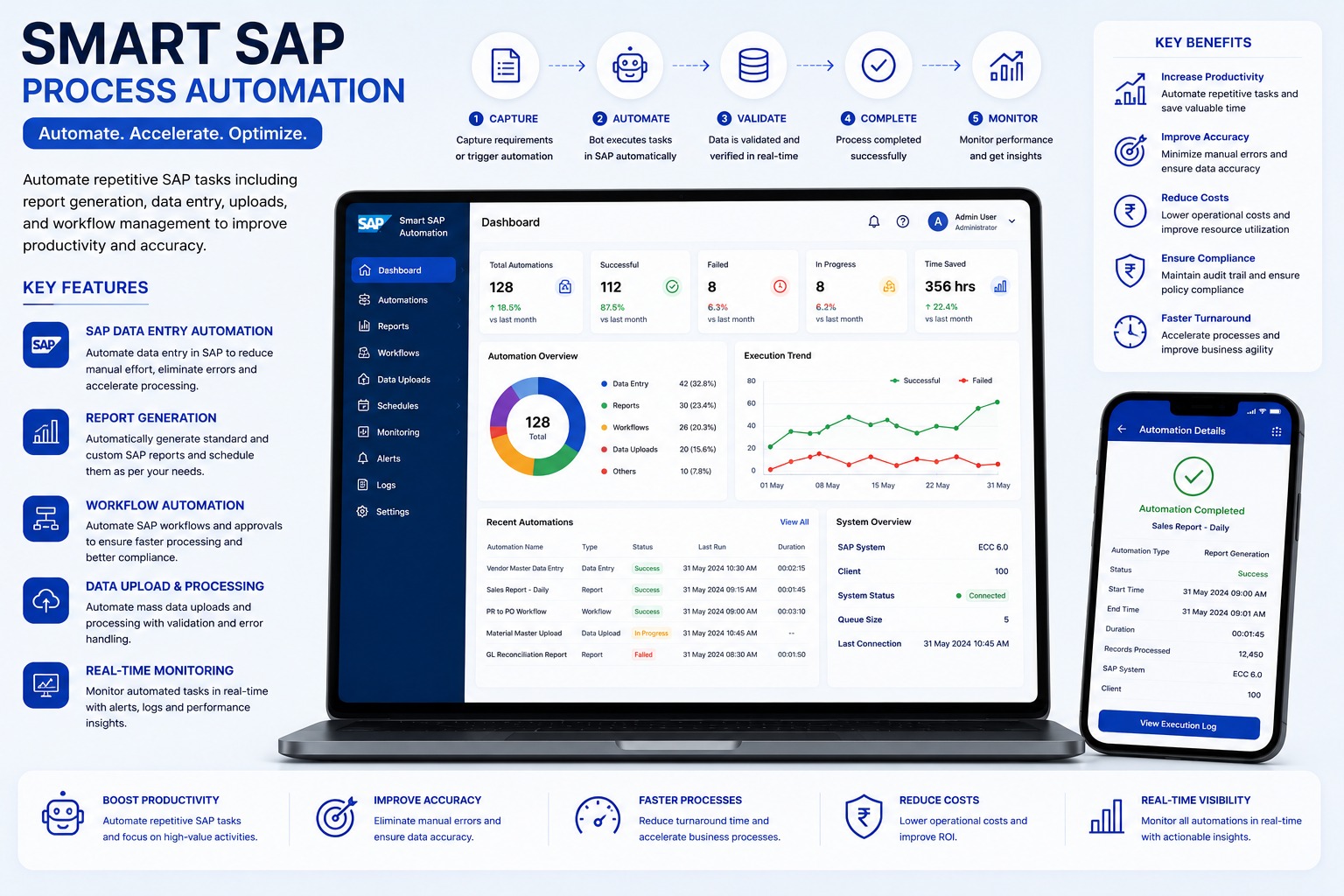
SAP reports are important for finance, sales, purchase, inventory, and management teams, but preparing the same reports every day or month consumes valuable time. SAP report generation automation turns recurring reporting steps into a controlled workflow.
Why Teams Automate SAP Reports
Manual reporting usually involves logging into SAP, selecting transaction codes, entering filters, waiting for output, exporting files, formatting Excel, saving files, and emailing stakeholders. Automation can perform these repetitive steps on schedule and maintain execution logs.
How The Workflow Works
The automation opens the required SAP transaction or report, applies approved filters or variants, validates the output, exports the file, names it correctly, and stores or emails it to the right users.
Common Automation Controls
- Scheduled daily, weekly, and monthly runs
- Company code, plant, branch, and date filters
- Excel, CSV, or PDF export
- Email and shared-folder delivery
- Run status, error logs, and retry support
Business Impact
Automated reporting reduces missed deadlines, manual formatting errors, dependency on one SAP user, and follow-up work. Managers receive reports on time, while teams can focus on analysis instead of repeated extraction.
Best Fit Processes
SAP report generation automation works well for MIS reports, stock reports, vendor reports, sales reports, purchase reports, ageing reports, reconciliation files, and month-end reporting packs.