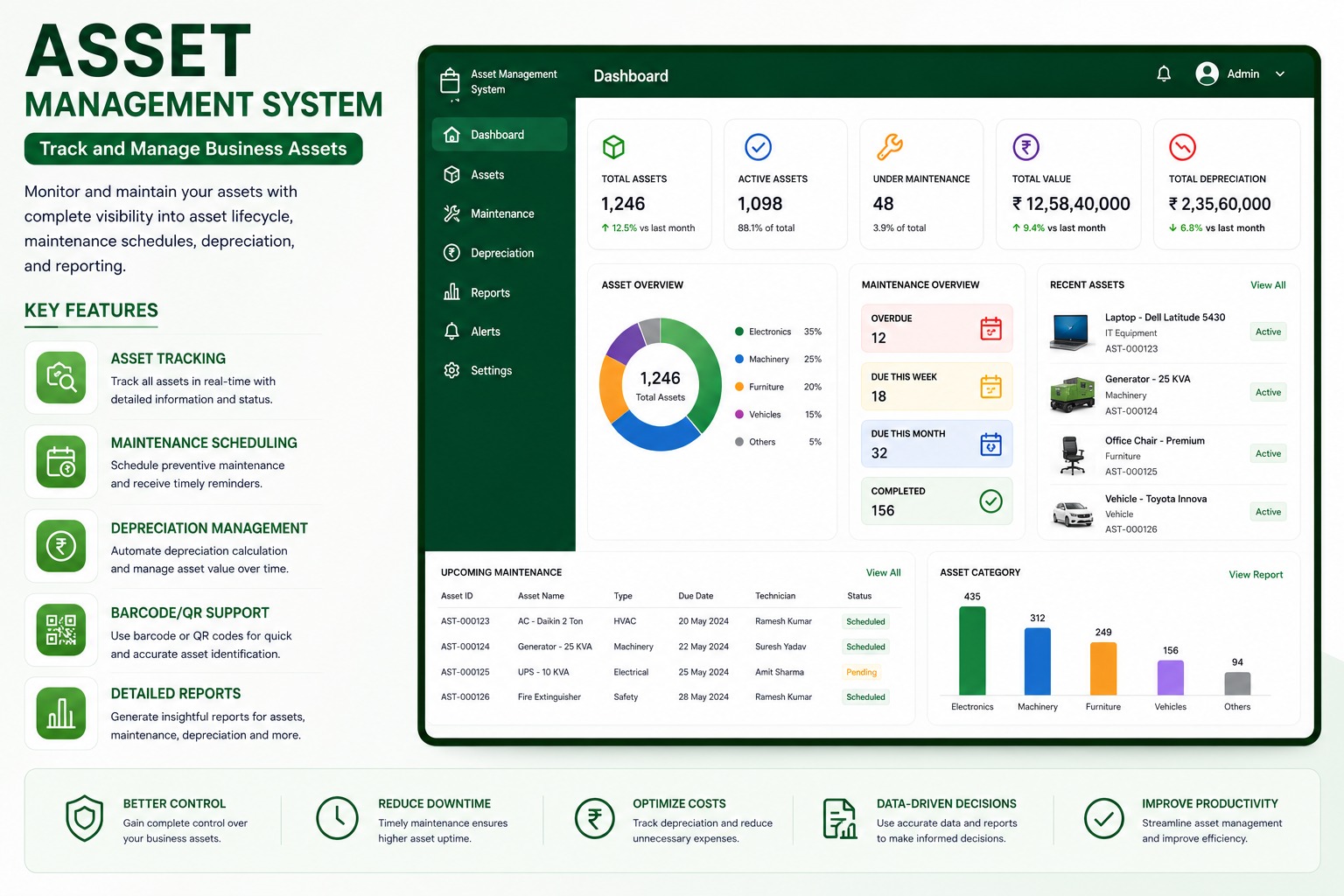
Organizations lose time and money when assets are tracked through spreadsheets, emails, and informal handover notes. An asset management system centralizes asset records, ownership, maintenance, documents, and movement history.
Centralized Asset Records
Each asset can be recorded with category, serial number, purchase details, warranty, location, assigned user, condition, current status, and supporting documents. This gives teams one reliable source for asset information.
Assignment And Movement Tracking
The system can track when an asset is assigned, returned, transferred, repaired, retired, or disposed. Managers can quickly see where an asset is located and who is responsible for it.
Useful Controls
- QR and barcode based identification
- Employee-wise and location-wise asset visibility
- Preventive maintenance scheduling
- Depreciation and asset value tracking
- Audit trails for transfers and changes
Better Compliance And Audits
Audit teams can review asset history, documents, maintenance records, and verification status without searching across multiple files. This improves accountability and reduces missing asset risk.